


Quick Answer
To store a rug properly, clean it thoroughly, make sure it is completely dry, roll it instead of folding it, and protect it with a breathable cover. Keep the rolled rug in a cool, dry location away from moisture, sunlight, heavy objects, and pests to help preserve its condition during storage.
Whether you are switching out seasonal decor, preparing for a move, or simply making space at home, knowing how to store a rug can help prevent unnecessary damage. A rug that is carelessly folded, exposed to moisture, or stored in an unsuitable storage area can develop creases, odors, mildew, stains, or pest damage.
In reality, proper rug storage does not have to be complicated. With a few simple preparation steps and the right storage conditions, you can keep your rug protected until you are ready to use it again.
How to Store a Rug Properly: 7 Easy Steps
A rug can pick up dust, stains, and everyday debris even when it looks relatively clean. Taking care of these issues before storage is essential for preserving its appearance and condition. Follow these seven simple steps to store your rug properly:
1. Clean the Rug Before Storage
Never put a dirty rug into storage if you can avoid it. Dirt, food particles, pet residue, and other contaminants left in the fibers can attract pests and cause unpleasant odors over time. Existing stains may also become more difficult to remove after sitting for months. Start by vacuuming both sides of the rug where appropriate and addressing visible spills or stains.
2. Make Sure the Rug Is Completely Dry
Moisture is one of the biggest concerns when storing a rug. Even a small amount of trapped moisture can create an environment where mold and mildew develop. After cleaning, allow the rug to dry completely before rolling it. Do not rely only on the surface feeling dry. The backing and deeper fibers should also be free of moisture before the rug is wrapped and stored.
3. Roll the Rug Instead of Folding It
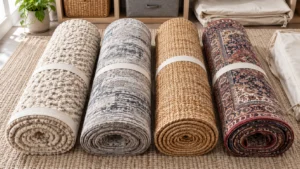
When deciding how to store an area rug, rolling is generally preferable to folding it for long-term storage. Folding can create sharp creases that may become difficult to remove and can place unnecessary stress on the rug’s fibers and backing. Roll the rug evenly from one end to the other without forcing it into an excessively tight roll.

4. Protect the Rug With a Breathable Cover
Once rolled, protect it from dust, dirt, and pests with a breathable fabric or rug-storage cover that allows air circulation. A suitable fabric or rug-storage cover allows air circulation while keeping surface contaminants away.
Avoid sealing a rug in airtight plastic for extended storage. While plastic may seem convenient, it can trap moisture inside the covering and increase the risk of mildew or musty odors.
5. Store the Rug in the Right Position
Position matters when storing a rug, particularly if you plan to keep it stored for an extended period. Keep the roll stable and supported so it does not bend, collapse, or become crushed.
Avoid placing furniture, boxes, or other heavy objects on top of the rolled rug. Excessive pressure can distort its shape or damage the fibers. If possible, keep the rug elevated from the floor to reduce exposure to accidental spills or moisture.
6. Choose a Cool, Dry Storage Location
A clean, dry, well-ventilated storage area is ideal. Avoid places that are prone to humidity, leaks, or significant temperature fluctuations, such as damp basements or poorly ventilated garages.
Direct sunlight should also be avoided because prolonged exposure can contribute to fading. If you are storing the rug at home, choose an area where it can remain protected without being squeezed between other belongings.
7. Protect the Rug From Pests
Pests can cause serious damage to rugs, particularly natural-fiber materials such as wool. Before storage, inspect the rug and surrounding areas for signs of insects or infestation.
Keeping the rug clean is an important part of pest prevention because food particles and organic debris can attract unwanted visitors. Periodically check a long-term stored rug for insects, damage, unusual odors, or other changes.
How to Store Different Types of Rugs
Different rug materials have different storage needs. While every rug should be clean and completely dry before storage, the best approach can vary depending on its fiber type, construction, and age.
How to Store a Wool Rug
Wool rugs are naturally resilient, but their fibres hold onto fine dirt and organic debris that may attract moths and other pests. So, when considering how to store a wool rug, gently remove surface soil and make sure any cleaning is fully dry. Roll the rug with care, use a breathable cover, and keep it in a cool, dry space. For long-term storage, check the rug periodically for pest activity or musty odors.
How to Store a Synthetic Rug
Synthetic rugs such as those made from nylon or polypropylene are typically durable and easier to maintain, but should still be cleaned and dried before storage. Roll the rug evenly, cover it with breathable material, and keep it away from moisture, excessive heat, and direct sunlight, which can affect its appearance or backing.
How to Store a Natural Fiber Rug
Natural fiber rugs, such as sisal and jute, can be sensitive to moisture. Make sure the rug is completely dry, roll it carefully instead of folding it, and store it in a dry, well-ventilated area. Avoid airtight plastic that can trap moisture.
How to Store an Oriental Rug
Oriental rugs, particularly antique, handmade, or valuable pieces, require extra care during storage. If you are wondering how to store an oriental rug, avoid experimenting with aggressive cleaning methods before storage. Have delicate rugs professionally cleaned when necessary and use appropriate breathable protection.
How to Store Area Rugs Between Seasons
As the seasons change, you may want to swap heavier winter rugs for lighter summer styles or update your decor for the colder months. Before putting an area rug away, vacuum it thoroughly, address stains, and make sure it is completely dry. Roll and cover it before placing it in a suitable storage area.
When the next season arrives, inspect the rug before bringing it back into your living space. Look for musty odors, moisture, pests, or signs of damage, then unroll it carefully and let it air out if needed. This simple seasonal routine can help keep your area rugs fresh and ready to use year after year.
How to Store a Rug During a Move
Moving can expose rugs to dirt, moisture, pressure, and rough handling. A little preparation can make a significant difference.
- Clean and Dry the Rug Before Packing
A clean, completely dry rug is easier to protect during transportation. Avoid packing a rug immediately after cleaning if any moisture remains in the fibers or backing. - Roll and Secure the Rug Properly
Create an even roll and secure it so it stays in place during the move. Avoid compressing the rug excessively, as this can affect its shape. - Protect the Rug During Transportation
Use a suitable protective covering and keep the rolled rug away from moisture, dirt, and heavy items that could damage it. - Store It Safely at the New Location
If you are not ready to use the rug right away, keep it in a clean, dry storage area rather than leaving it in a vehicle, garage, or other unsuitable location.
Make Rug Storage Easier With Professional Rug Cleaning and Wrapping
Knowing how to store a rug properly starts with preparing it before it goes into storage. Professional rug cleaning can be especially helpful for rugs with deep dirt, stains, pet residue, or odors. Cleaning the rug beforehand prevents these contaminants from remaining trapped in the fibers for months, where stains and odors may become more difficult to address.
At Portland Rug Cleaning, we provide expert rug cleaning services to ensure your rugs are better prepared for storage and ready to use when the time comes. Our IICRC-certified team understands that every rug is different and uses cleaning methods suited to the rug’s material, construction, and condition. Plus, we also offer protective rug wrapping to help you keep your freshly cleaned rug protected while it is in storage.
Contact us today to schedule professional rug cleaning and give your rug the expert care it deserves before putting it away!
FAQs
1. Will folding a rug damage it?
⇒ Folding a rug occasionally for short-term handling may not cause immediate damage, but prolonged folding can create creases and place stress on fibers and backing.
2. Is it better to roll or fold a rug?
⇒ Rolling is generally better for long-term rug storage because it avoids sharp folds and reduces the risk of permanent creases. The rug should be rolled evenly rather than compressed tightly.
3. How to roll a rug for storage?
⇒ Clean and completely dry the rug first. Lay it flat, then roll it evenly from one end to the other without creating sharp bends or excessive pressure. Protect the finished roll with a breathable cover.
4. How to store large area rugs?
⇒ To store a large area rug, clean and dry it thoroughly, then roll it evenly. Secure the roll without compressing it too tightly, cover it with breathable material, and keep it in a cool, dry area where it can remain supported without heavy items placed on top. Since the large area rugs can be difficult to clean, roll, and handle safely, professional rug care services can be helpful when extra care is needed.
5. How do I prevent mold when storing a rug?
⇒ To prevent mold when storing a rug, make sure the rug is completely dry before storage and keep it in a cool, dry, well-ventilated location. Avoid airtight plastic coverings that can trap moisture and check long-term stored rugs periodically.
6. How long can a rug stay rolled up?
⇒ A rug can remain rolled for an extended period when it has been properly cleaned, dried, protected, and stored in suitable conditions. Periodic inspections are still recommended, especially for long-term storage.

